
Result description
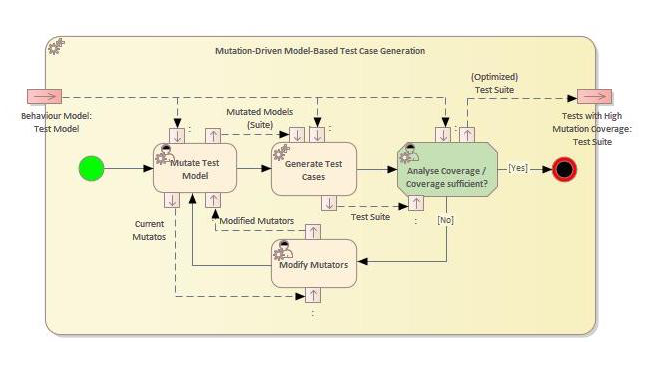
VALU3S aims to design, implement and evaluate state-of-the-art V&V methods and tools across application domain boundaries. To this end, methods, tools and concepts suitable for the V&V of automated systems are investigated with respect to operational safety, tamper resistance and data protection requirements. Currently, modelling languages such as UML are often used to model these methods and tools. While the flexibility offered by the language is a positive aspect, it also brings problems in communicating ideas effectively. Not everyone is an expert in UML. By creating a DSL that clearly specifies which diagrams and elements can be used in the creation of a V&V method definition or workflow, everyone follows a common standardised language. To meet these requirements, several consortium partners have developed VVML, a simple, comprehensive, and easy-to-use interface for modelling workflows and artefacts in a strictly reduced and standardised way during the workflow lifecycle. VVML can be used to track the creation, modification, and reuse of artifacts such as requirements, designs, documents and test cases.
Addressing target audiences and expressing needs
- Help in technical expertise
- Collaboration
- Fellowship to advance my/our research
Unlike today’s complex and heterogeneous diagrams, VVML is a simple and easy-to-use interface. The partners involved in the development of VVML hope that this modelling language will become highly visible and attractive to multiple stakeholders in the V&V field, so that it can become a benchmark on which all practitioners and researchers can rely to represent their V&V methods and tools. It is also expected that this same interest can trigger new collaborations with other organisations willing to actively participate in the improvement of the VVML in order to enhance its features.
- Other Actors who can help us fulfil our market potential
- Research and Technology Organisations
- Academia/ Universities
R&D, Technology and Innovation aspects
VVML is now ready for testing and its handbook is available for free. It is hoped that VVML can be adopted as a working tool, building a community of users who can provide feedback and contribute to its improvement. Indeed, its use is intended to be expanded to other projects. Moreover, LLSG will develop a Digital Transformation Modelling Language to enhance and commercialise the VVML tools.
The intention of LieberLieber Software GmbH (LLSG) is to create a community around VVML so that more and more practitioners can use this tool in their research. Therefore, LLSG has made a Model Driven Generation (MDG) plugin available free of charge to reach as many users as possible in order to promote the adoption of VVML and create a community of users that, at the same time, can contribute to its improvement and further development. It is believed that the dissemination of VVML will be straightforward as it is implemented in EA, a well-known modelling tool with a large number of users. This tool is widely used for modelling (cyber)systems, and its integration with VVML provides a powerful platform for designing and validating complex workflows. Similarly, it is also expected that this plugin will attract new potential users and stakeholders to use and purchase EA, which in turn may lead to the creation of training courses and consultancies.
The VVML is implemented in EA, a fast and intuitive UML modelling tool by Sparx Systems (see sparxsystem.com). New modelling languages can be created in EA with UML profiles, which can be used either directly or packaged in an MDG technology for more convenient use. MDG technologies connect seamlessly to EA to provide additional toolboxes, diagrams, UML profiles, shape scripts, patterns, tagged values, and other modelling resources. Such MDG technology automatically generates a list of elements and relationships in the Diagram Toolbox. To replicate the use of VVML, a user should have access to the EA tool and the VVML plugin. EA is very popular and low-cost, while VVML is free. Moreover, it is guaranteed that no workflow data can be lost in case a user would open in EA even without the plugin installed. Alternatively, in case the EA tool is not available, VVML also supports the generation of XML files from workflows, which can then be used by tools other than EA.
The sustainability of the VVML clearly depends on the community of practitioners and researchers that is built around it. In this sense, it is expected that VVML will be widely adopted and used by organisations and individuals in the V&V field. This would allow updates to be included to correct bugs and improve functionality more quickly. Furthermore, the sustainability of VVML can be influenced by the availability of documentation and training materials to help users understand and effectively use the tool. As the source code will remain with LLSG (part of Lieber.Group), the entity plans to develop a customer support plan to collect all user feedback, which would allow further development of the tool and to design and provide more customised consultancy and training services in response to user and customer demands and concerns. Lastly, VVML is also expected to be adapted to commercial projects (DTML Digital Transformation Modelling Language).
- Asia
- North America
- South America
- Europe