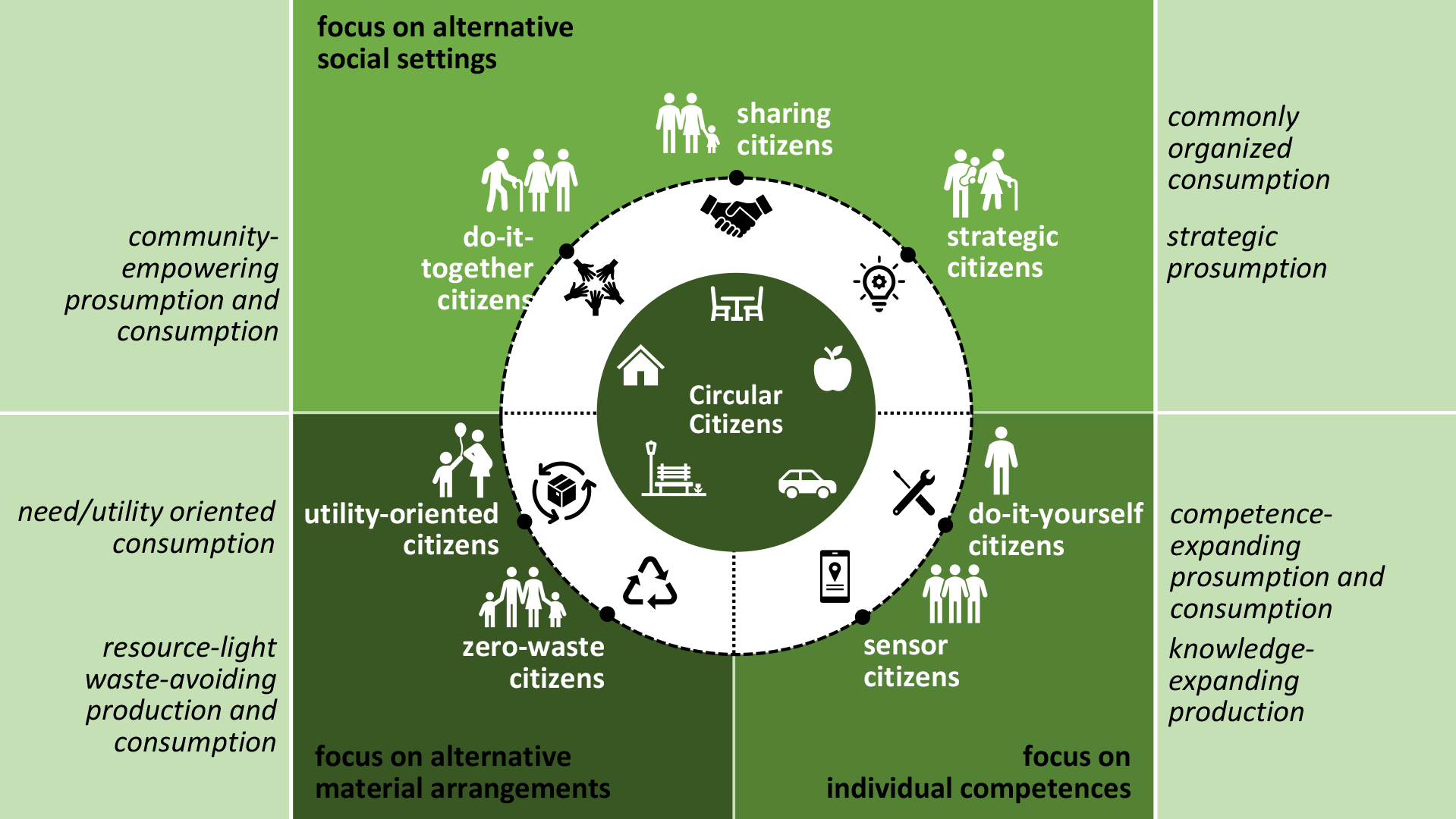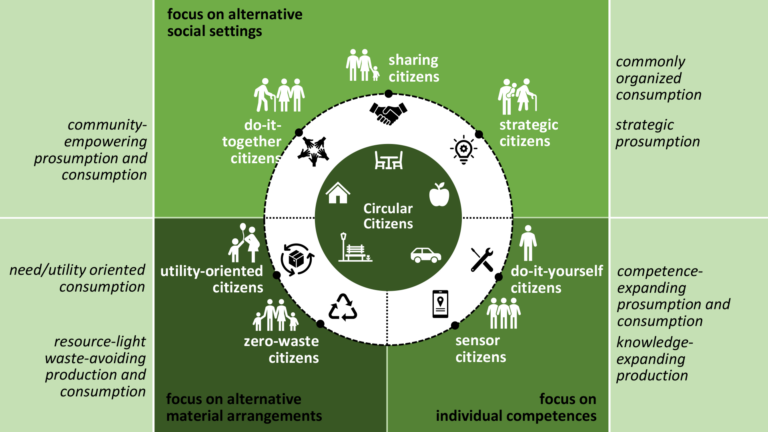
The taxonomy shows 7 circular citizen types organized into 3 motivation-focused categories, distinguished by main circular production-consumption practice modes and described in terms of features, actions, challenges and impact:
1. focus on alternative social settings
– do-it-together citizens: community-empowering prosumption and consumption
– strategic citizens: strategic prosumption
– sharing citizens: commonly organized consumption
2. focus on individual competencies
– do-it-yourself citizens: competence-expanding prosumption and consumption
– sensor citizens: knowledge-expanding production
3. focus on alternative materials arrangements
– zero-waste citizens: resource-light and waste-avoiding production and consumption
– utility-oriented citizens: need/utility-oriented consumption
 Climate-neutral and smart cities
Addressing target audiences and expressing needs
- Collaboration
- Fellowship to advance my/our research
We are looking for policymakers that aim to engage citizens in the implementation of a circular economy in their cities and support them by applying support strategies and measures in urban policies.
We need a fellowship and collaboration to formulate preliminary recommendations regarding support strategies and measures in policy for the broad range of bottom-up initiatives that emerged through the project in the field of social innovation for a circular economy. We aim to present suggestions for some specific measures of support for each type of circular citizen. The main background for developing recommendations will be based on the systematic description of the different types of circular citizens, associated social innovation and citizen characteristics in terms of challenges, obstacles and impact defined through the project. Recommendations will be formed through consultations and the complementary study of policy instruments. We need to consult experts on social innovation and the circular economy from science and practice as well as change agents to discuss measures of support based on the typology developed through the project. Complementarily, we need to identify and analyse existing policy or other support measures already implemented in social innovation and the circular economy to understand their broader applicability to cases of social innovation for a circular economy.
- Public or private funding institutions
- EU and Member State Policy-makers
- Academia/ Universities
Result submitted to Horizon Results Platform by CARDIFF UNIVERSITY