Result description
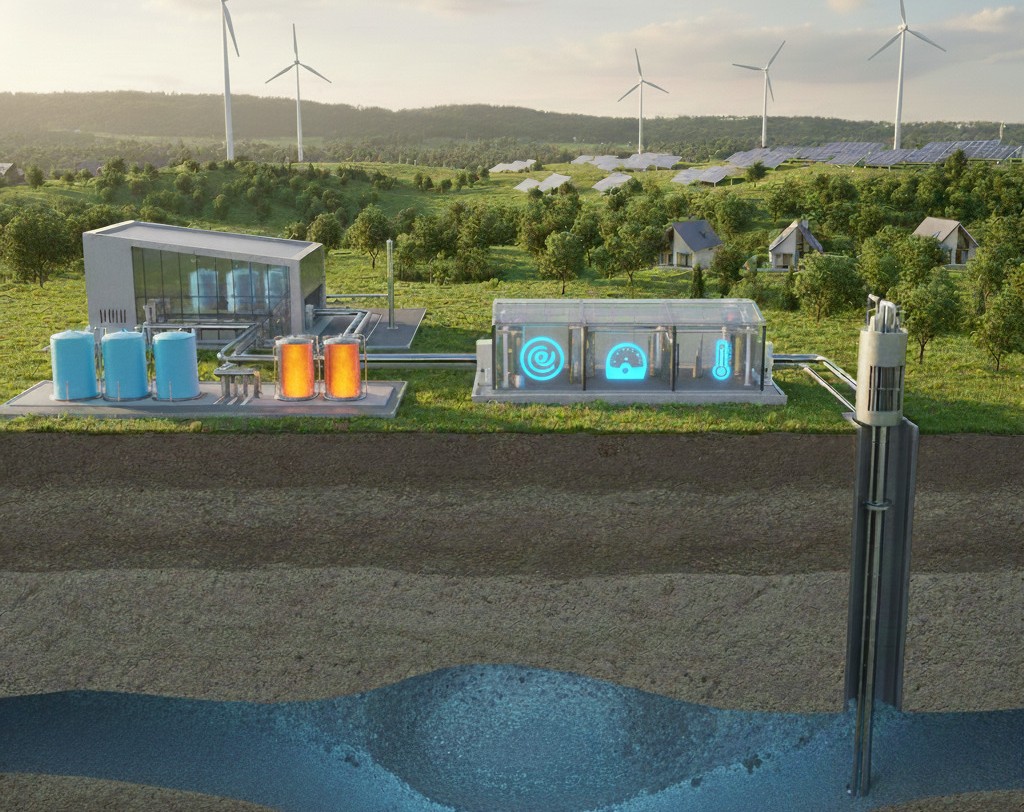
This result demonstrates the feasibility of integrating geological storage and power generation into an efficient, thermally and operationally coupled system. It provides proof of the implementation of interface technology for smooth integration between geological reservoirs and surface energy systems, paving the way for new hybrid business models. This result has been identified as patentable, encompassing the interface and interaction logic between the subsurface and transcritical CO₂ cycles. Preliminary system-level functional diagrams and design parameters for interface components have been completed, which represent a basis for thermal integration. Control logic and interface strategies developed and tested within the CEEGS project support seasonal and hybrid configurations and, as such, ensure operational flexibility with intermittent renewables.
Addressing target audiences and expressing needs
- Help in technical expertise
- Use of research Infrastructure
- Collaboration
Funding, financing or cooperation demonstrate effective integration of the subsurface and surface equipment of the technology
- Public or private funding institutions
- International Organisations (ex. OECD, FAO, UN, etc.)
- Research and Technology Organisations
R&D, Technology and Innovation aspects
CEEGS developed a scalable system utilising CO₂ for power, heat, and cooling, and partial CO₂ sequestration, turning surplus renewables into storable thermal energy for on-demand use. A 20 kWel demo raised the tech from TRL2 to TRL4 with EU validation, offering low cost, long duration, and rare-earth independence. Next: demo plant and business plan to reach TRL6.
- Applications from a few kW to several MW of power,
- Capacity to store several Mtpa of CO2
- Modular construction possible
- Adaptable power ratings
- Standardisation potential
·Modular system design,
·Easy to scale up or down based on local energy demand and storage needs,
·Connection of renewable power plants, industrial CO₂ sources, including cleaning, as a source of the CO2 and possible user of the stored energy, or district heating/cooling networks without major redesign,
·CO₂ injection, geothermal heat extraction, and underground storage already have industrial analogues in oil & gas, CCS (Carbon Capture & Storage), and geothermal power.
·Standardised designs for specific storage volume ranges, reservoir types, and power ratings can be developed, enabling faster rollouts.
·Storage technology without the use of rare earths,
·No ignition or flammability, as CO2 is an inert gas
·No toxic media used
·CO₂ sequestration – decarbonisation of hard -to-abate industry, and possibly negative emissions for sources relying on biomass for power generation, such as pulp&paper sector or waste-to-energy sector
·Excess green electricity, no backup from fossil fuel
·new value chains in renewable energy, energy storage, and CO₂ management