Result description
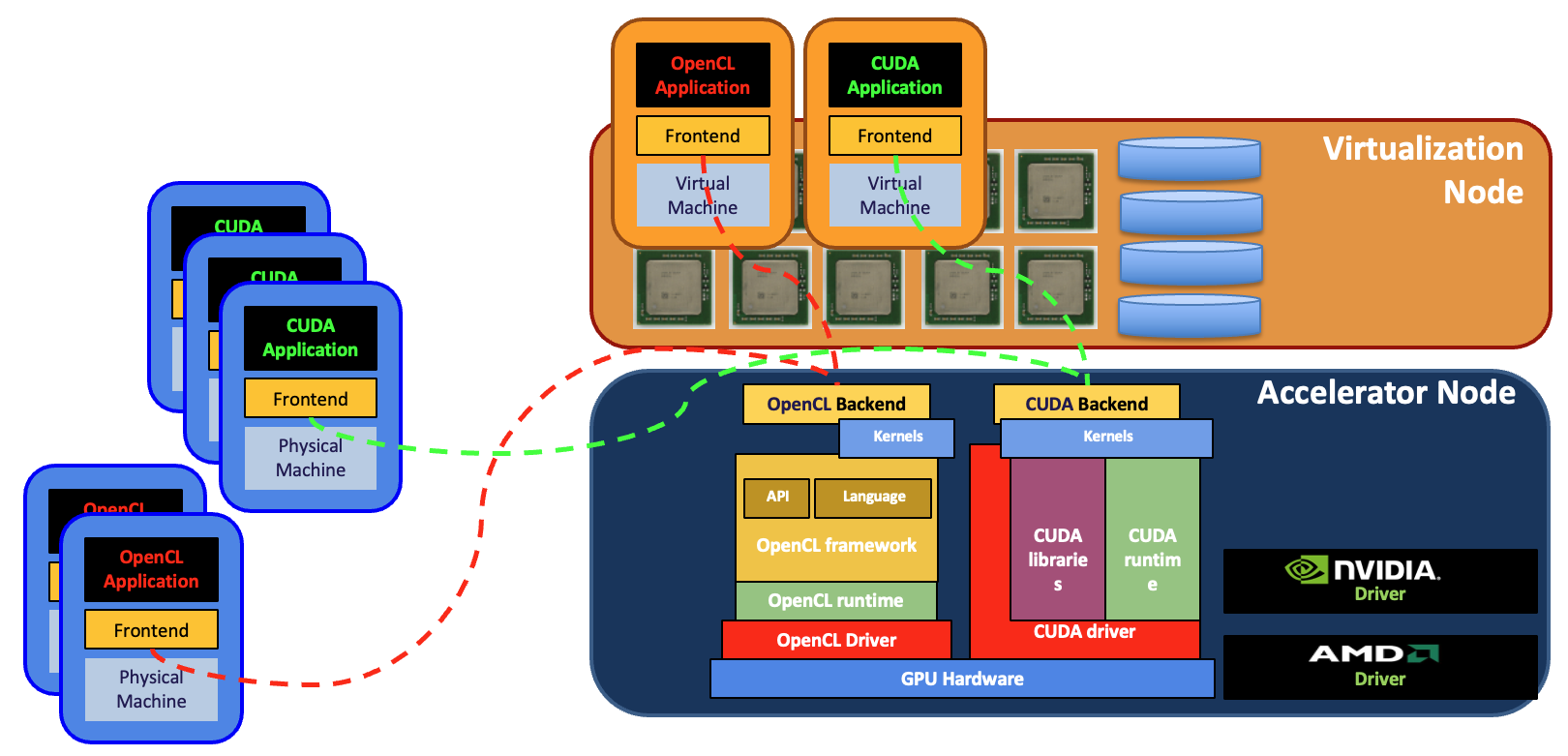
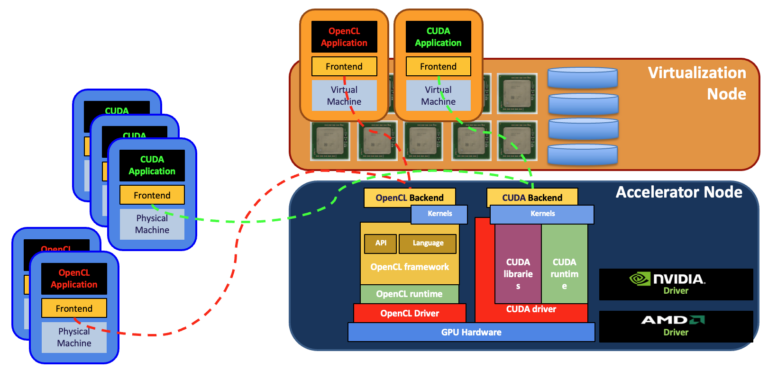
GVirtuS is a virtualized GPU offloading framework that enables devices to execute demanding AI workloads by transparently leveraging a remote, high-performance GPU. Our system is based on our previous version of the framework, updated to support CUDA 12.6 and integrated with DL libraries, including PyTorch, Caffe, and OpenCV DNN. We validated our framework on representative AI tasks, including human pose estimation and image classification. The experimental results demonstrate substantial performance gains, achieving up to a 17.8x speedup over CPU-only execution while maintaining ease of deployment.
This confirms that transparent remote GPU acceleration is a practical and effective solution for unlocking high-performance AI capabilities on the vast ecosystem of GPU-less devices.
Addressing target audiences and expressing needs
- Use of research Infrastructure
- Collaboration
- Fellowship to advance my/our research
We keep looking for use case applications that can make use of shared GPUs in order to reduce infrastructure costs.
We also look for funding for our junior researchers to be able to have long and stable contracts.
Our main mission is to produce an open source solution and to collaborate with partners for future project proposals.
- Research and Technology Organisations
- Academia/ Universities
R&D, Technology and Innovation aspects
At the start of the CLEVER project, the GVirtuS framework was already supported by experimental validation (TRL 3). By the end of the CLEVER project, GVirtuS had been integrated with technologies from other partners in a laboratory environment (TRL 4). Its stable performance and full set of features will be demonstrated within the CLEVER use cases during the final project review (TRL 5).
The solution is open source, containerized, and all the demos are available on the repository.