Result description
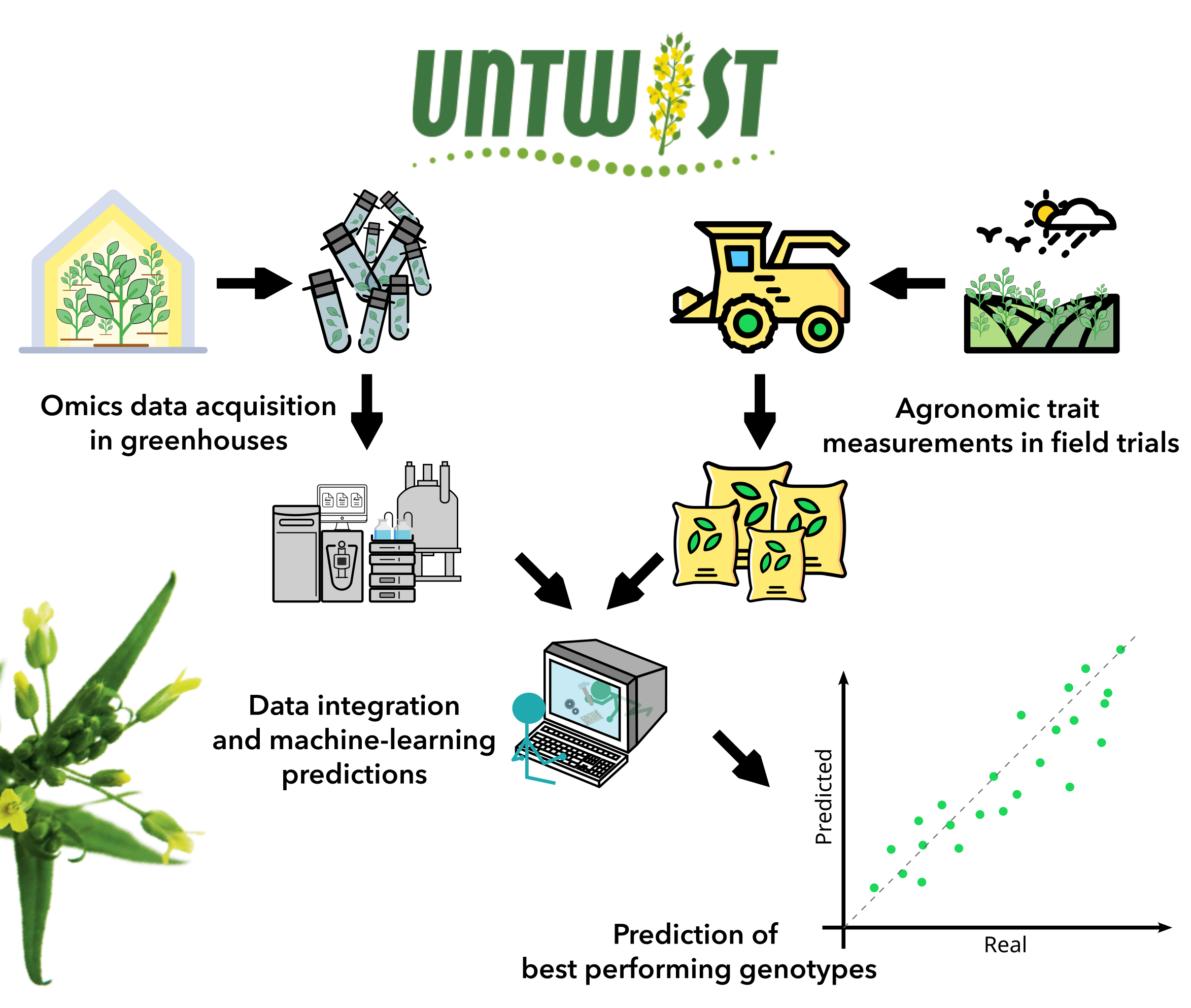
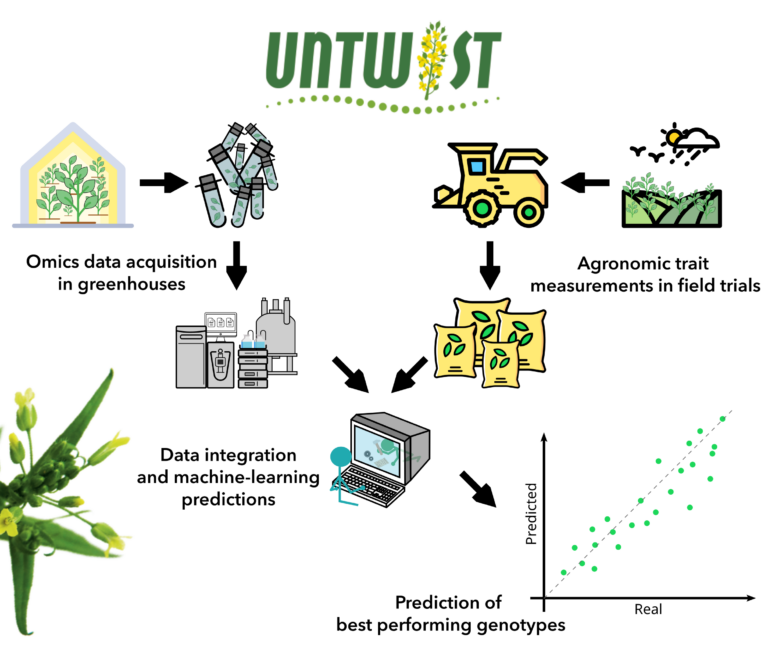
The predictive models are designed to predict important crop traits using biological and environmental data. They use metabolomic profiles, genomic information and environmental variables as inputs. Using machine-learning algorithms, the models analyze patterns within these datasets to predict agronomic traits such as Thousand Kernel Weight (TKW) and seed lipid composition. By identifying metabolic biomarkers and genomic regions associated with these traits, the models enable early prediction of plant performance before field trials. This approach helps breeders and researchers identify promising genotypes more quickly and efficiently, hence accelerating crop improvement and supporting the development of stress-resilient and high-yielding varieties.
Addressing target audiences and expressing needs
- Grants and Subsidies
- Business partners – SMEs, Entrepreneurs, Large Corporations
- Expanding to more markets /finding new customers
Targeting plant breeders, ag researchers, and agri-tech stakeholders focused on data-driven, climate-resilient crop improvement. The goal is to define practical use cases that showcase predictive models and build a solid proof of concept. Seeking partners to test and refine models using metabolomic, genomic, or environmental data to speed up trait prediction and early genotype selection. Collaborations will strengthen applicability in real breeding contexts towards practical tools for breeding programs, sustainable agriculture, and development of crops better adapted to environmental stresses.
- Public or private funding institutions
- EU and Member State Policy-makers
- Other Actors who can help us fulfil our market potential
R&D, Technology and Innovation aspects
Predictive models have been developed and tested using available datasets. The next steps are to finalize the models and further validate their predictive performance in order to establish a robust proof of concept and assess their applicability in breeding programs.