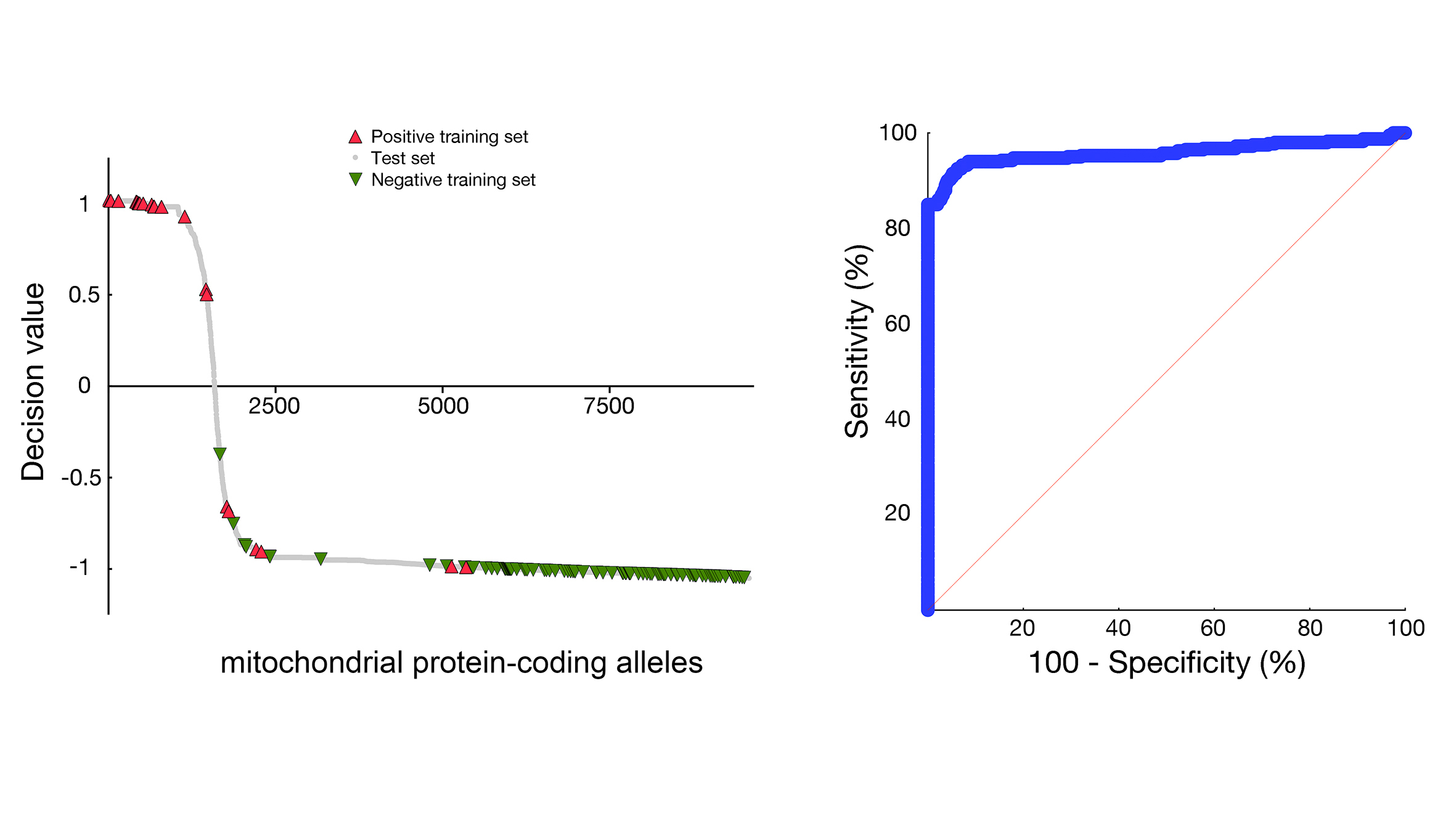
Linking mitochondrial DNA (mtDNA) mutations to patient outcomes remains a formidable challenge. Multiple sequence alignments are often used when estimating the potential significance of mitochondrial variants. However, factors including sample set bias, alignment errors, and sequencing errors currently limit the utility of multiple sequence alignments in pathogenicity prediction. Here, we describe a new approach to assessment of site-specific conservation and variant acceptability that minimizes previous limitations, and using the output of our methodology, we deploy machine learning in order to predict pathogenicity for thousands of human mtDNA variants. Our work demonstrates that a substantial fraction of mtDNA changes not yet characterized as harmful are, in fact, likely to be deleterious. Our findings will be of direct relevance to those at risk of mitochondria-associated illness, but the general applications of our methodology also extend beyond the context of mitochondrial disorders.
Addressing target audiences and expressing needs
- Business partners – SMEs, Entrepreneurs, Large Corporations
- Incubators / Accelerators
- Financing Expertise
- Technology Transfer Expertise
- Legal / IPR advise
- Business plan development
- Fellowship to advance my/our research
- Business Angels
- Venture Capital
- Crowd-funding Equity
- Public or private funding institutions
- Other Actors who can help us fulfil our market potential
- Research and Technology Organisations
- Academia/ Universities
- Private Investors
R&D, Technology and Innovation aspects
Result submitted to Horizon Results Platform by HELSINGIN YLIOPISTO