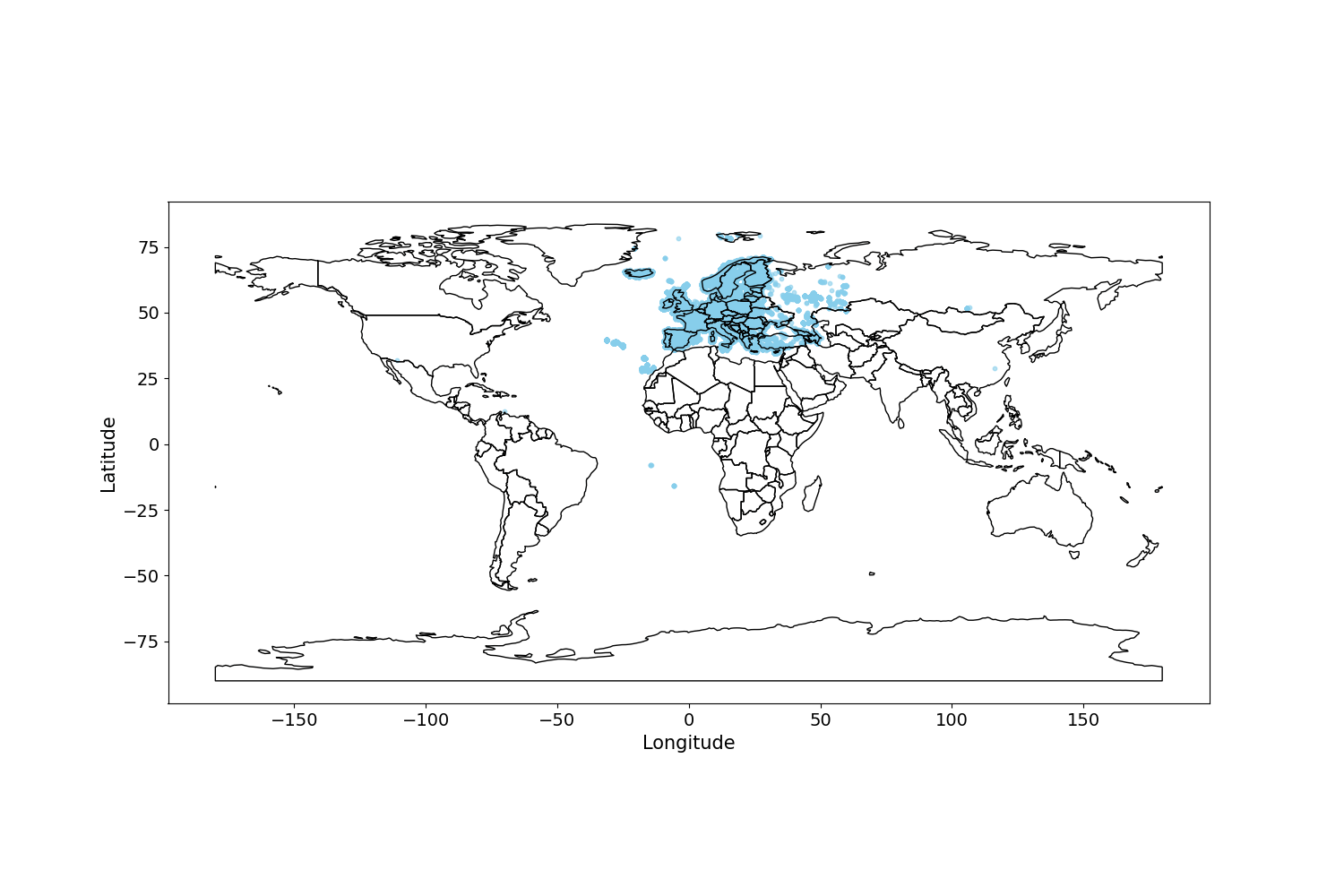
Main features: automated species identification based on sound, as a downloadable AI model, that can also be embedded in other web services.
Objectives: Classifier that is able to identify 1 or more species in a given audio clip, covering over 500 European bird species, With over 75% mean-average-precision (mAP) typical performance. o Fully open and reproducible method (e.g., training data); o Make best use of available open data, and of pretrained models where appropriate; o Document the sound recognition quality for both smartphone audio recordings and for some common acoustic monitoring devices, in European habitats.
Advantages: Specialised to European bird species, and using an API output format that is compatible with other related services.
What is new: Compared against prior work this is tailored to European bird species, and validated against same.
Why is it important: Acoustic ID is one of the most reliable indicators for many birds, and thus can be used widespread as indicators of abundance, migratory patterns etc.
Addressing target audiences and expressing needs
- To raise awareness and possibly influence policy
Our development of AvesEcho is intended to provide increased reliability and relevance of automatic bird sound identification, for biodiversity applications such as population monitoring. We are looking for others to validate this method in situ. Further, we are working towards large-scale robust acoustic monitoring of all soniferous terrestrial animals: birds, insects, bats, anurans, and more. Thus we seek collaboration on the methods, data sources, and on worldwide deployment and validation.
- EU and Member State Policy-makers
- Research and Technology Organisations
- Academia/ Universities
R&D, Technology and Innovation aspects
AvesEcho sits within a suite of “AI for Nature” tools that Naturalis maintains and develops. Further development and refinement (e.g., to other species groups) will be supported by publicly- and commercially-funded further development.
Embedded in the suite of “Naturalis AI” services
We have published open versions of the model, the training data, and other software code.
Details on request