
Several tests have been done in the furnace from room temperature to 600°C and the sensor has withstood the high temperature. The phase change from austenite to ferrite can be followed by the sensor. The sensor is able to measure the austenite level in the furnace until 600°C.
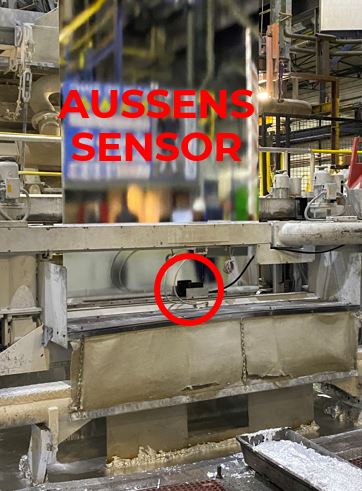
Then, the AUSSENS sensor has been installed at 2 locations on the continuous galvanizing line. Several campaigns have been followed during several weeks and the sensor has withstood the zinc bath harsh environment (zinc dust and temperature). The results are very promising and a correlation with the X-CAP sensor has been done. As remind, the X-CAP is a sensor measuring the austenite level in absolute terms.
Finally, the sensor has been installed at the exit of the annealing line. Several campaigns have been followed and the sensor has withstood to the environment. The results are very promising and a correlation between the AUSSENS sensor and the quench temperature has been done. As remind, the quench temperature is a key parameter to assess and control the mechanical properties of the strip on the annealing line which directly depends on the austenite level.
Addressing target audiences and expressing needs
- Grants and Subsidies
- Help in technical expertise
The AUSSENS sensor has been installed on galvanizing and annealing line and the sensor has withstood to the harsh industrial environment. The results are very promising.
The sensor has also been installed in the furnace to assess its behaviour related to high temperature. Several tests have been done in the furnace and the sensor can resist until 600°C but not until 800°C. We are looking for a solution to make the AUSSENS sensor able to resist to high temperature (800°C) in order to install it in the furnace after the slow cooling section in the annealing line.
- Public or private funding institutions
- Research and Technology Organisations
- Academia/ Universities
R&D, Technology and Innovation aspects
The next steps consist of making the AUSSENS sensor able to resist to high temperature (until 800°C). The purpose is to install the sensor after the slow cooling section in the annealing furnace.