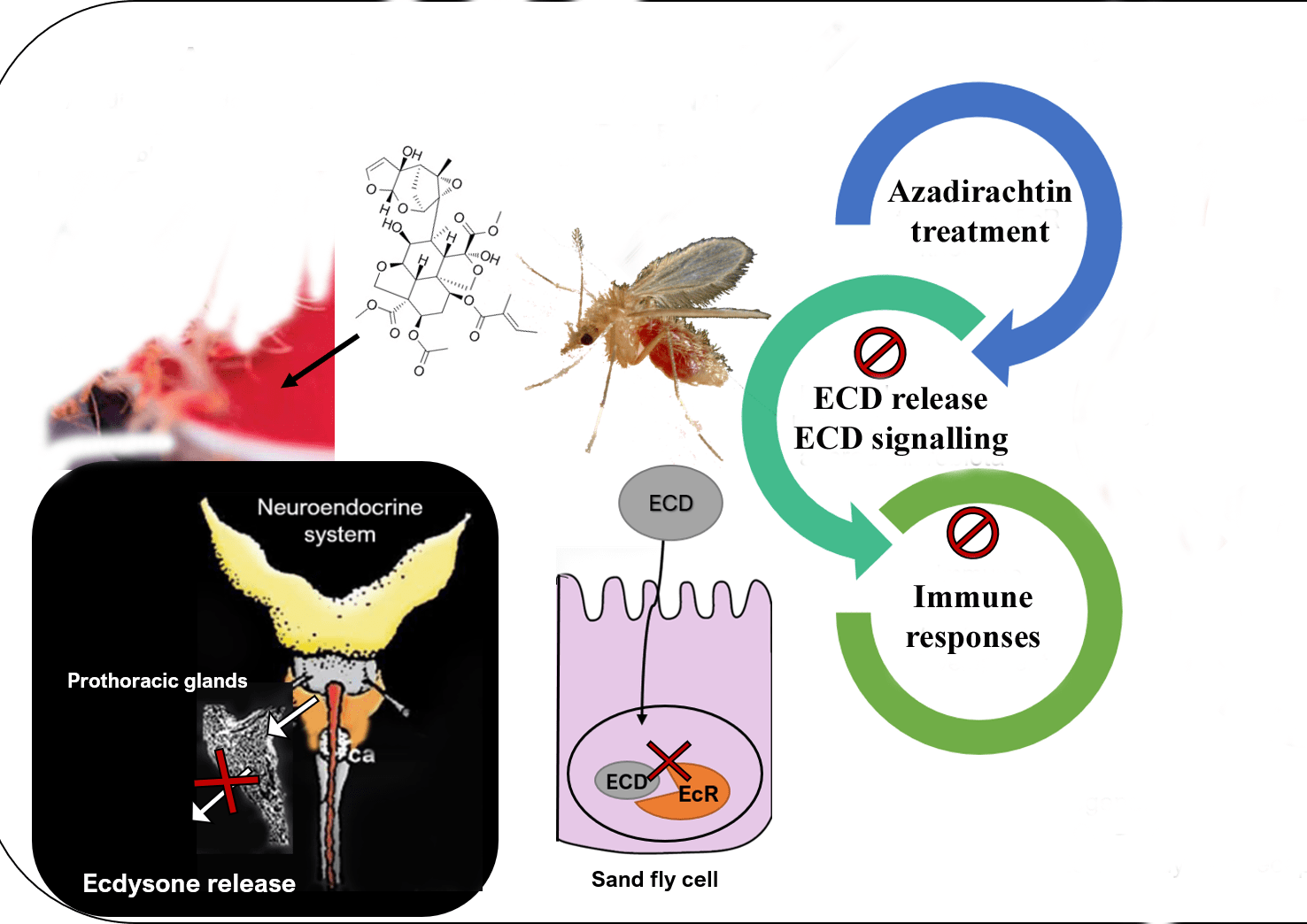
Our research uncovered how a natural plant compound, azadirachtin, interferes with the hormonal system of Phlebotomus perniciosus — the sand fly responsible for transmitting Leishmania infantum, the parasite causing visceral leishmaniasis.
When exposed to azadirachtin, sand fly larvae failed to grow properly, and key genes controlling their development and immune defenses were turned off. Remarkably, when the natural insect hormone ecdysone was added together with azadirachtin, normal growth and immune gene activity were restored.
This discovery demonstrates that ecdysone is essential for both development and immunity in sand flies. By revealing this hormonal control, our work opens new possibilities to disrupt parasite transmission using environmentally friendly strategies that act on the insect’s physiology rather than relying on insecticides.
The findings are relevant not only for leishmaniasis control but also for understanding how hormones regulate immunity in other insect disease vectors, such as mosquitoes and tsetse flies.
Addressing target audiences and expressing needs
- Grants and Subsidies
- Collaboration
- Fellowship to advance my/our research
This result targets researchers in vector biology, parasitology, insect endocrinology, and immunology, as well as public health professionals involved in leishmaniasis and other vector-borne diseases. It addresses the need to understand how ecdysone signaling regulates immunity not only in sand flies but also in other dipteran vectors of human pathogens. The findings support innovative, hormone-based strategies for sustainable parasite transmission control within a One Health framework.
- Public or private funding institutions
- Research and Technology Organisations
- Academia/ Universities
R&D, Technology and Innovation aspects
Azadirachtin proved to suppress ecdysone signaling and immune genes in P. perniciosus in lab assays.. The next phase will focus on the nanoencapsulation of azadirachtin using biocompatible delivery systems such as liposomes, polymeric nanoparticles, or other nanosolutions, to increase stability, control release, and enhance bioavailability under field conditions.