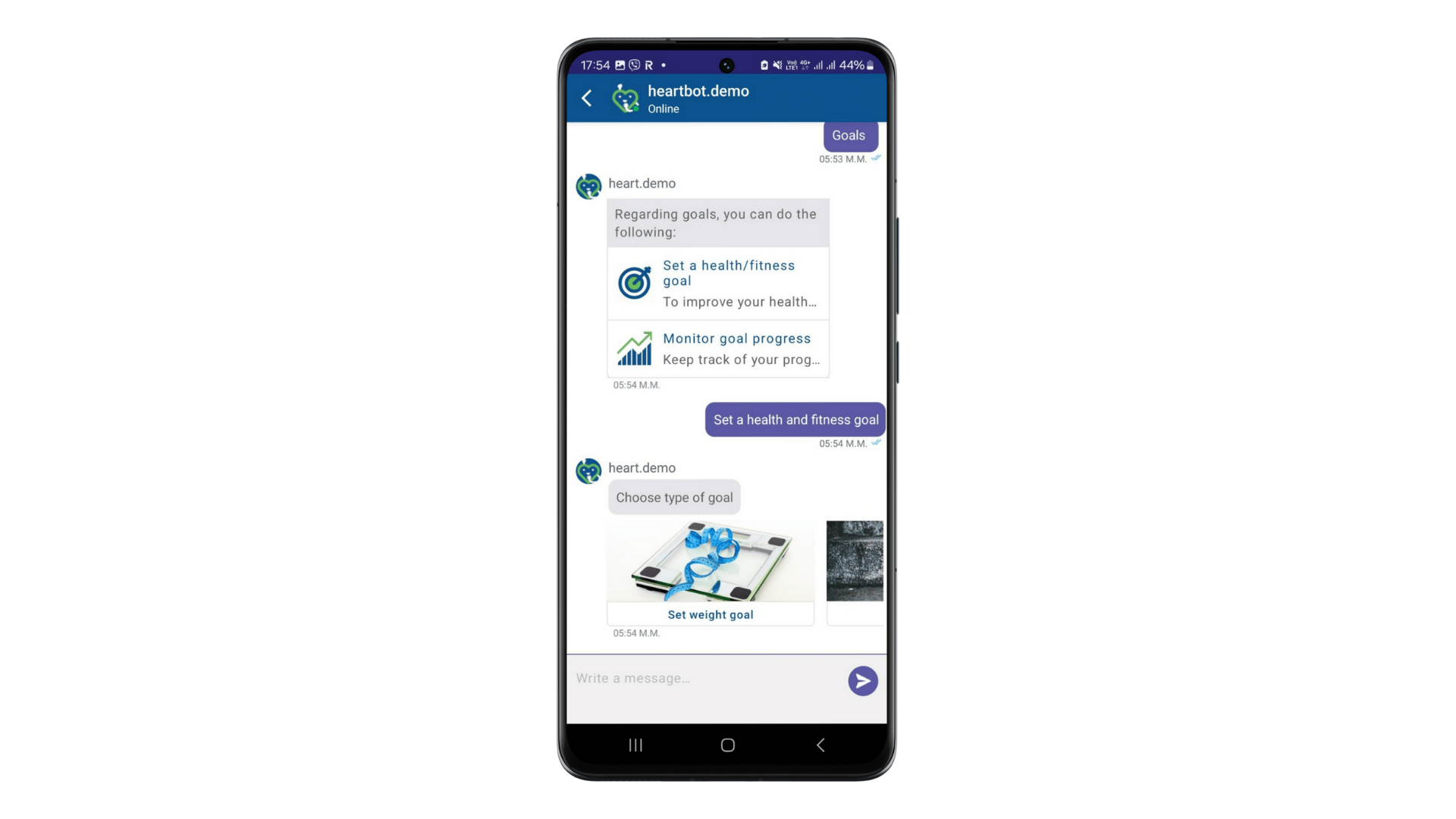
HeartBot is a mobile app (Android/iOS) that delivers tailored guidance to maximize health benefits from time spent in parks, waterfronts, and green corridors. Two versions interface with either activity trackers or the Feel Emotion Sensor, offering shared features (goal setting, progress, nudges, rich responses with images/tables) plus sensor-specific insights, route/activity suggestions, and behavior-change prompts.
Addressing target audiences and expressing needs
- Use of research Infrastructure
- Collaboration
Pilot cities, parks & public-health agencies to deploy HeartBot in real settings. Wearable/data partners (activity trackers, Feel Emotion Sensor, EO/mobility/env) to enrich insights. Community orgs and researchers to co-design content, run trials, and publish outcomes.
- Public or private funding institutions
- Research and Technology Organisations
- Private Investors
R&D, Technology and Innovation aspects
Not defined
HeartBot scales by adding locales, languages, and park datasets without changing the core app. It is API-driven and device-agnostic, supporting multiple wearables and data feeds. Modular content packs enable quick rollout to new cities, while cloud-based analytics and configuration profiles let partners manage goals, messages, and routes across many deployments.
HeartBot is easy to replicate through standardized onboarding and content packs, device-agnostic APIs for activity/emotion data, and configurable goals, routes, and nudges. Cities use playbooks and a train-the-trainer model, with multilingual, GDPR-ready consent flows. A versioned content library and telemetry dashboards ensure consistent rollouts and auditable updates across deployments.
Open, modular APIs reduce maintenance; content packs and train-the-trainer embed know-how locally. Tiered licensing/support align costs to city capacity. Privacy-by-design and GDPR-ready flows build trust. Built-in KPIs on engagement and health proxies justify ongoing funding, while shared libraries lower the cost of updates across deployments.