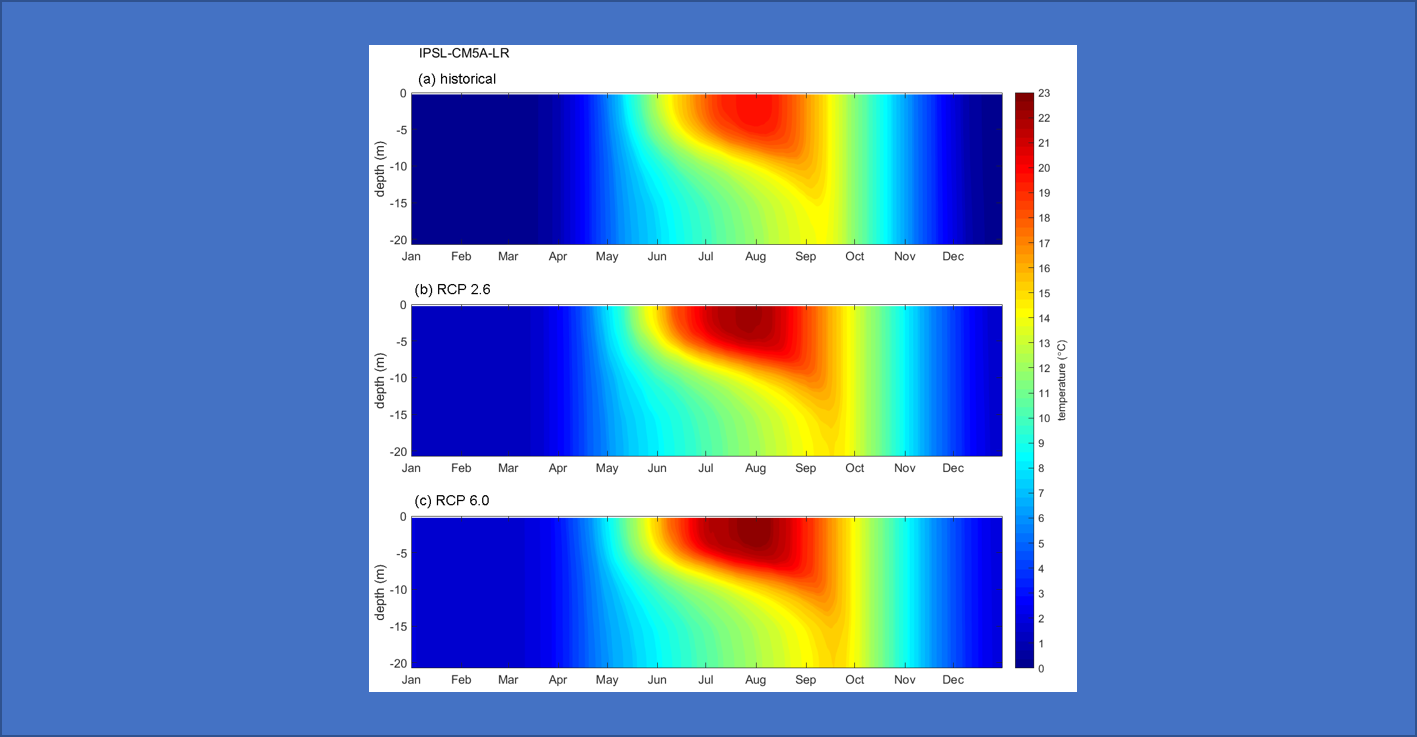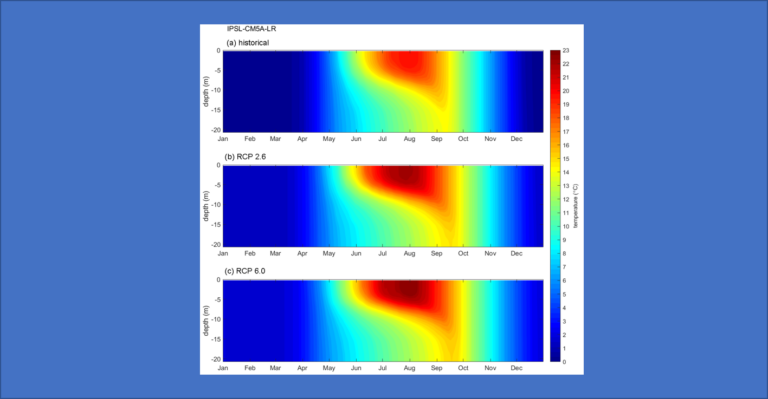
A study as part of the MANTEL EJD ITN by scientists in Sweden has assessed implications for Lake Erken water temperature under two future scenarios (RCP 2.6 and RCP 6.0) from 2006 to 2099. RCP 2.6 is the strongest mitigation pathway that is expected to limit mean global warming to between 1.5 and 2 ⁰C. RCP 6.0 is a low mitigation pathway where global warming is projected to rise to between 2.5 and 4 ⁰C by the end of century compared to the pre-industrial period. The surface temperature in the lake was projected to increase from 0.87 to 1.48 ⁰C for RCP 2.6 and from 1.59 to 3.59 for RCP 6.0, and the length of the stratification also was projected to be longer, from 9 to 16 days for RCP 2.6 and from 20 to 33 days for RCP 6.0. The results suggest important changes in the factors affecting lake biogeochemistry directly through changes in water temperature and indirectly by influencing the availability of light and nutrients.
Addressing target audiences and expressing needs
- We are sharing our knowledge
- To raise awareness and possibly influence policy
Despite the vulnerability of the water sector to climate change and extreme climatic events, there is limited information on how climate change will impact lakes. This has resulted in the striking fact that water quality considerations hardly feature in key policy-relevant instruments like IPCC. As a result, water quality is not playing the fundamental role in international policy-making that it should. We want to bring water quality forecasting to the forefront of the scientific disciplines supporting managers and policy-makers to design measures for adaptation to a new climate.
- Others/ No specific audience
- EU and Member State Policy-makers
- International Organisations (ex. OECD, FAO, UN, etc.)
Result submitted to Horizon Results Platform by UPPSALA UNIVERSITET