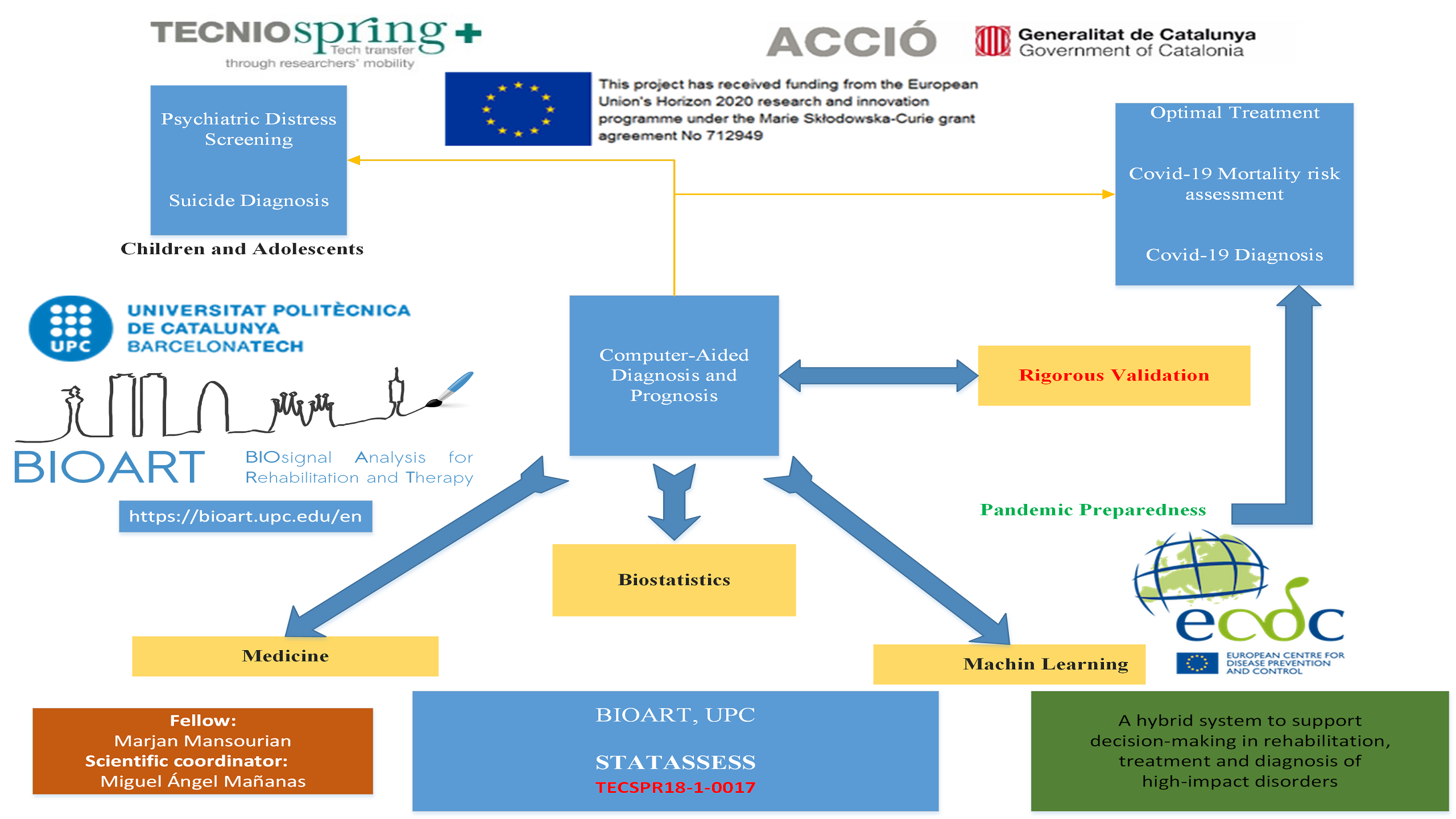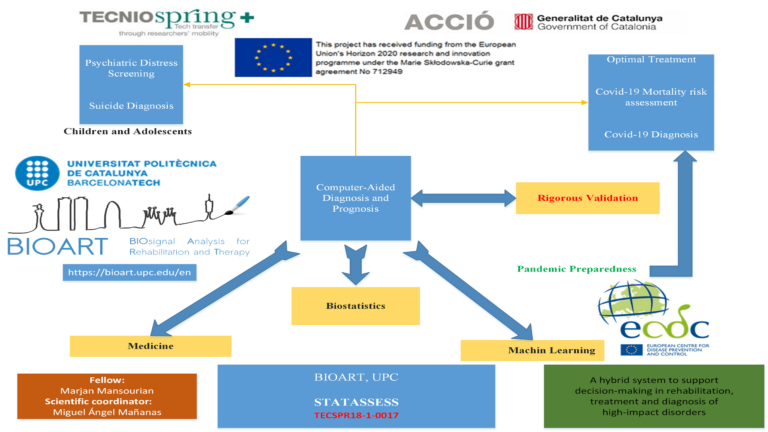
At hospital admission, clinicians require simple tools to identify hospitalized COVID-19 patients at high risk of mortality. Such tools can significantly improve resource allocation within hospitals. The developed risk assessment of patient mortality provides physicians with guidance for making tough decisions. Accurate and early coronavirus disease-2019 (COVID-19) diagnosis is still essential for health policymaking. We designed and implemented a reliable COVID-19 diagnosis method to provide the risk of infection without the RT-PCR and CT-scan results. We focused on COVID-19 and non-COVID-19 Pneumonia. Identifying the possible factors of psychiatric symptoms among children can reduce the risk of adverse psychosocial outcomes in adulthood. We designed a classification tool to examine the association between modifiable nutrition and lifestyle factors risk factors and psychiatric symptoms. Suicide is one of the most critical public health concerns and the second cause of death among young people in many countries. We designed a screening program to diagnose suicide ideation/behavior, using questionnaires, such as Patient Health Questionnaire (PHQ).
Addressing target audiences and expressing needs
- Grants and Subsidies
- Collaboration
- Fellowship to advance my/our research
We are looking for economic resources that allow us: a) to contract industrial lawyers, innovation managers, and medical device regulation specialists; and b) to contract post-doctoral fellows. We also seek potential Hospital Information System (HIS) companies for collaboration to offer next-generation hospitals for evidence-based pandemic management.
- Public or private funding institutions
- Research and Technology Organisations
- Academia/ Universities
R&D, Technology and Innovation aspects
The developed computer-aided diagnosis and prognosis systems were designed and validated on real datasets (e.g., Mental health and in-hospital COVID-19). External validation and also dynamic prediction must be performed. Then, considering the regulatory requirements, the interface of the COVID-19 diagnosis and prognosis systems must be provided to connect to the HIS of the hospitals. The Android App and secure web page of the psychiatric and suicide screening programs must also be provided.
In the developed models, cross-validation was used to ensure that the results were internally replicable. However, external validation must be used to ensure that the results are replicable. For COVID-19 prognosis, the proposed models are now being tested on the datasets from the other countries of the EU. The calibration and discrimination results will be published soon.
We provided computer-aided diagnosis and prognosis for mental disorders and COVID-19. Our proposed methods for COVID-19 prognosis can be extended to any infectious disease during future pandemics. It is also related to “pandemic preparedness” introduced by the “European Centre for Disease Prevention and Control.” Mental health was included in the UN Sustainable Development Goals (SDGs), showing its impact on society. Mental disorders caused 7% of all global burden of disease (GBD) as measured in DALYs, and 19% of all years lived with disability. “Pandemic preparedness” and mental health are two critical issues, and the proposed diagnosis and prognosis models are thus sustainable on the long term.