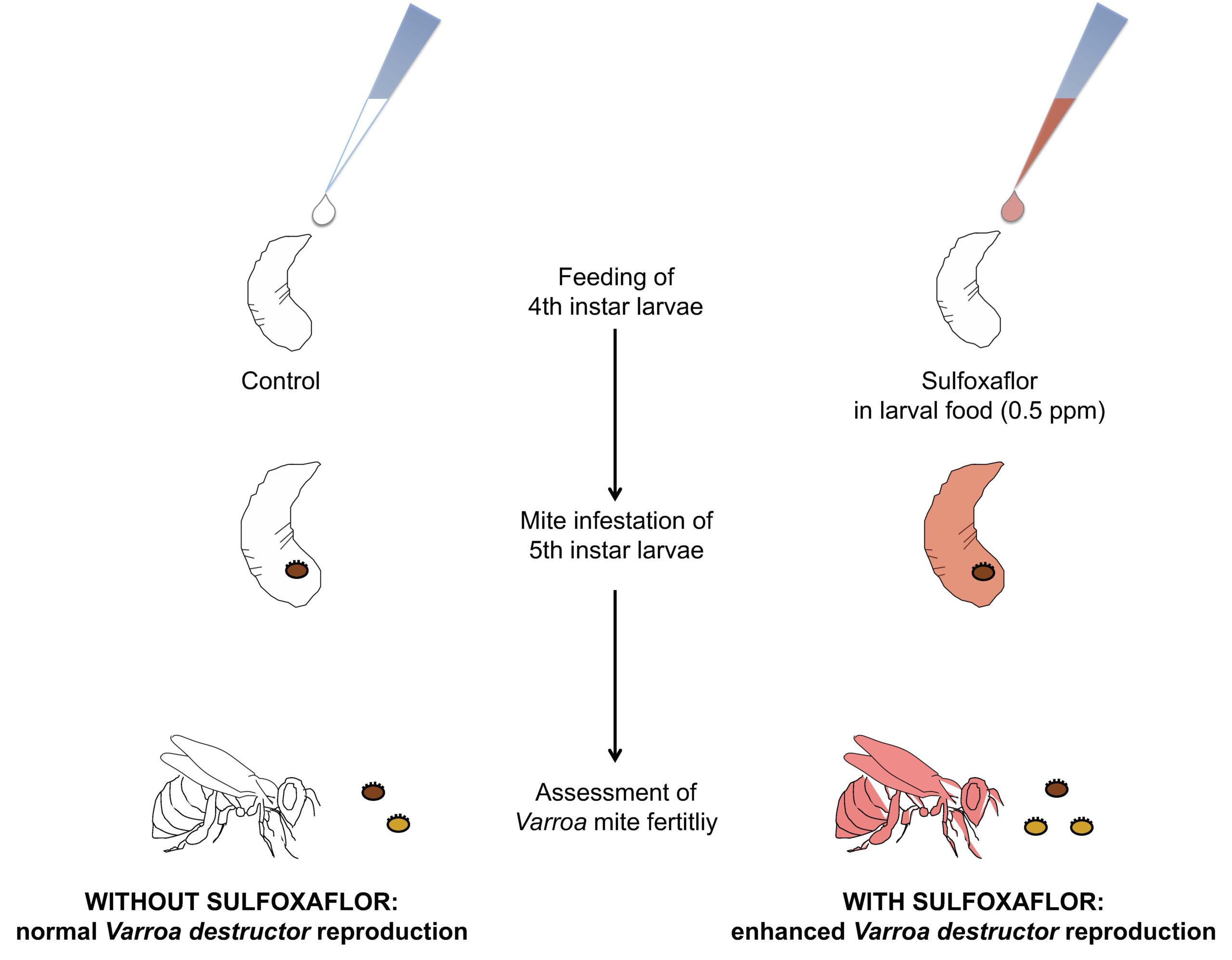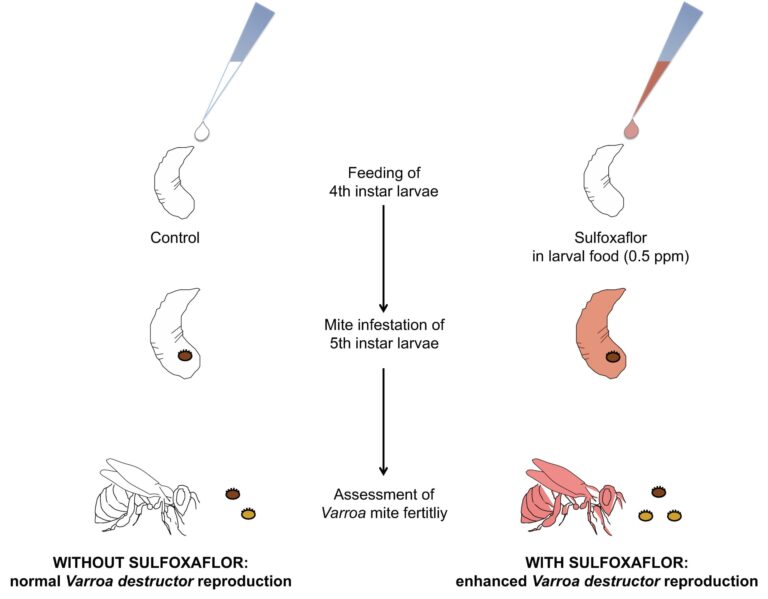
Beekeepers are confronted with unsustainable high losses of managed Western honey bee (Apis mellifera) colonies. There is consensus that such losses are closely associated with ectoparasitic mites (Varroa destructor) which are potent vectors of several viruses. However, V. destructor may also interact with other stressors, such as acaricides (e.g., coumaphos) or widely used neonicotinoid-like insecticides (e.g., sulfoxaflor), and the possible interactions between mites and these chemicals are still poorly understood. Here, we show that field-realistic concentrations of sulfoxaflor can increase the reproduction of V. destructor. Furthermore, in combination with coumaphos, sulfoxaflor can also cause higher mortality in bee larvae. Our data support that neonicotinoid (-like) insecticides can not only have negative consequences for bees, but also seem to have positive effects on mites.
Addressing target audiences and expressing needs
- To raise awareness and possibly influence policy
We are sharing our knowledge with policy makers and stakeholders
- EU and Member State Policy-makers
- International Organisations (ex. OECD, FAO, UN, etc.)
- Research and Technology Organisations
Result submitted to Horizon Results Platform by UNIVERSITA DEGLI STUDI DI UDINE