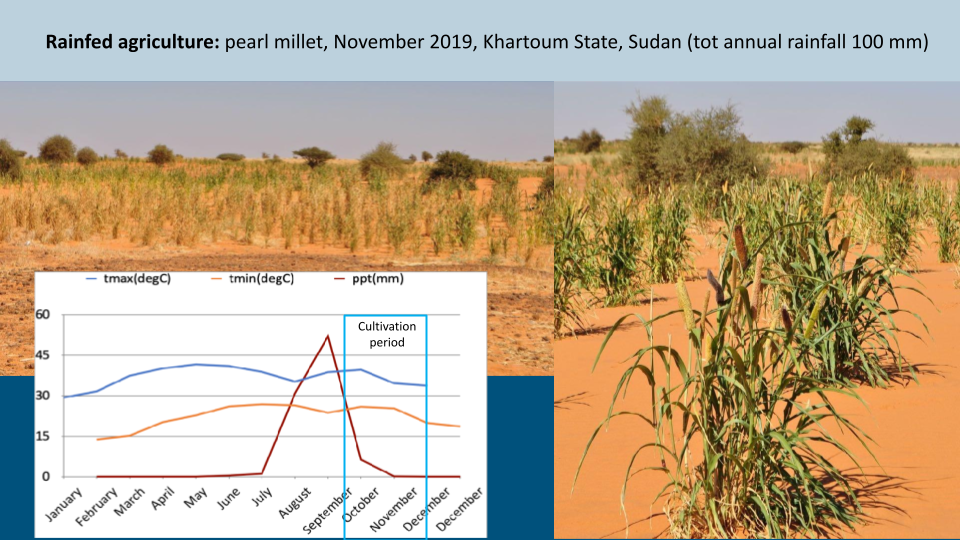
Remote and ground observations revealed that pearl millet can grow with as little as 100 mm of annual rainfall, contrary to mainstream indications that set the minimum rainfall for viable plants in absence of irrigation to 300 mm. During our research, we build a global model of traditional cultivation practices of three key drought-tolerant crops (finger millet, pearl millet and sorghum). These models highlight the importance of ecological factors such as the duration of the plant growing cycle, soil water-holding capacity, and soil nutrient availability in shaping millet and sorghum agriculture worldwide. Our field observations align closely with our research findings, challenging the conventional views on the viability and variability of agricultural systems in drylands. Traditional practices have been used for over 5000 years and have proven to be effective in drought-prone areas. By using these practices, farmers can adapt to the increasing aridity levels worldwide and ensure food security in dryland regions. Additionally, traditional practices can help preserve indigenous knowledge and cultural heritage, which is crucial for the well-being of local communities.
 Adaptation to climate change
Addressing target audiences and expressing needs
- To raise awareness and possibly influence policy
We are looking for opportunitie to bring our results to the attention of people who can use this knowledge to make a substantial impact on the agricultural systems of drylands. We specifically need people who can understand how to incorporate these results into effective policy making. Possibly also a collaboration with agonomists who are open to include traditional knowledge into their research strategies and focus their attention to traditional landraces in parallel to “imrpoved” crops.
- International Organisations (ex. OECD, FAO, UN, etc.)
Result submitted to Horizon Results Platform by UNIVERSIDAD POMPEU FABRA