Result description
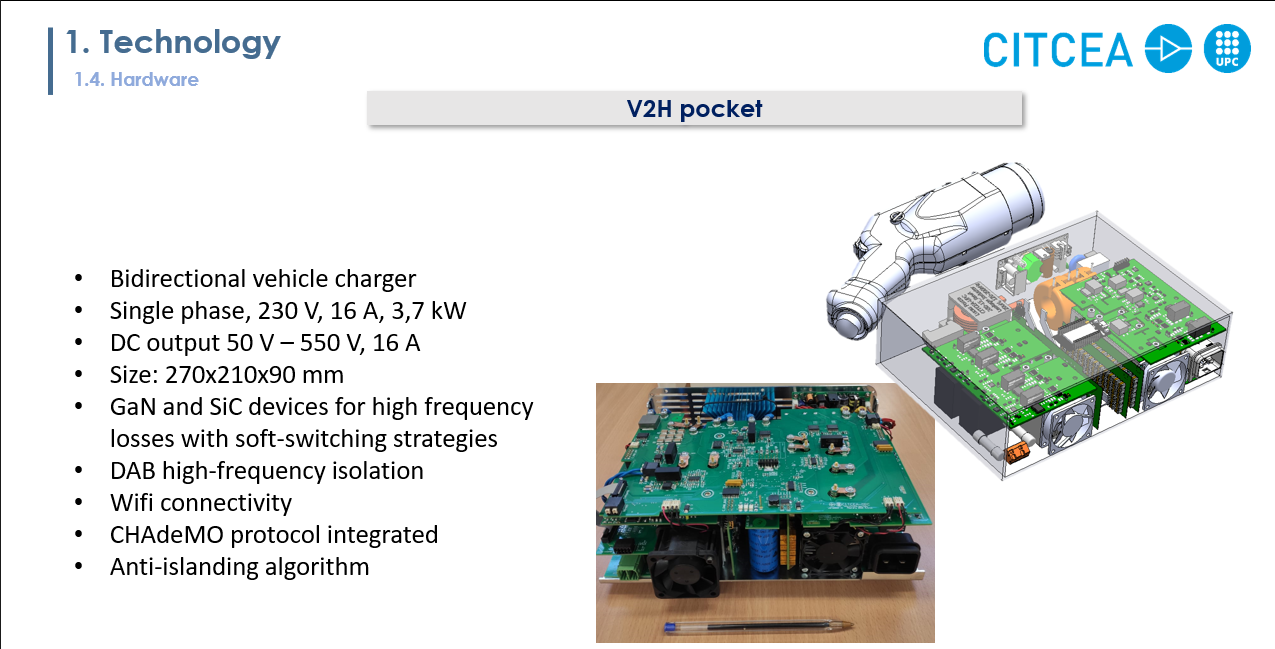
The technology is currently at a TRL 4: the bidirectional converter incorporated in the charger has been tested at laboratory scale and the research team is making progress in the design of the electric charger. The TRL 5 could be reached when the EV charger lab scale prototype is fully developed.
Addressing target audiences and expressing needs
- Venture Capital
- Other type of Investment
EV charger manufacturers
EV automakers
Co-development: This strategy is based on the collaborative development of the technology with a partner company and is considered the fastest and most interesting way to commercialize the V2H technology given the current state of development of the current technology.
Patenting the technology would not be strictly necessary for the implementation of this strategy but an NDA agreement is an essential step to protect the know-how of the technology.
- Private Investors
R&D, Technology and Innovation aspects
The technology is currently at a TRL 4: the bidirectional converter incorporated in the charger has been tested at laboratory scale and the research team is making progress in the design of the electric charger. The TRL 5 could be reached when the EV charger lab scale prototype is fully developed.
V2HPocket team is participating in the FEVER project within the framework of the European Union and foresee that, at the end of the project (end of next year), a TRL6 could be achieved as the charge will have been tested in two pilots (operational level).
The bidirectional charger concept encompasses many different use cases, such as vehicle-to-home (V2H), vehicle-to-building (V2B), and vehicle-to-grid (V2G) services. Depending on whether you want to use electricity from an EV battery in your home or building electrical charges, there are different abbreviations for each of these use cases. Your vehicle can work for you, even when feedback to the network isn’t for you.