
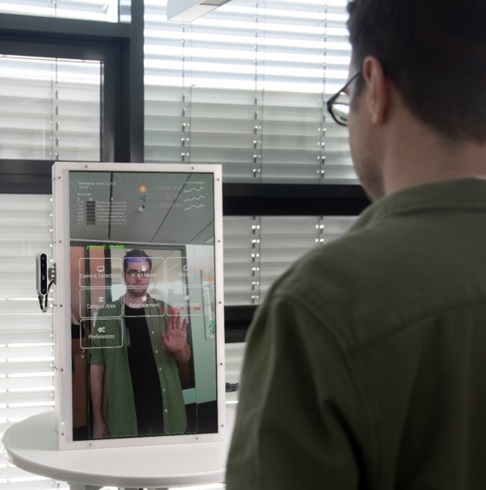
In the VEDLIoT project, the smart mirror underwent a substantial reduction in power consumption through the strategic integration of state-of-the-art ASIC ML accelerators. These accelerators employ advanced machine learning algorithms efficiently, contributing to a significant decrease in the energy requirements of the smart mirror. Two neural networks widely used in this scenario are based on the YOLOv7 architecture. In an effort to improve energy efficiency, evaluations were performed with the EmbeDL toolchain for pruning the object recognition DNN (using the COCO dataset) and the gesture recognition DNN (using a self-created dataset) to further increase the efficiency of the system.
Addressing target audiences and expressing needs
- Fellowship to advance my/our research
Our vision is to bring about a smarter, more cost-effective, and user-friendly experience for everyone. We have essential need for advancements in both ML models and accelerators. Striving for breakthroughs in ML models will enhance the intelligence and capabilities of our systems, while improvements in accelerators will contribute to more efficient and faster processing. Our goal is to create affordable solutions that break down barriers and turn technology into a tool that enriches the lives of people from all walks of life.
- Research and Technology Organisations
- Academia/ Universities
R&D, Technology and Innovation aspects
Continued progress in manufacturing processes, sourcing strategies, or innovative approaches to component integration. The aim is to ensure that the smart mirror not only boasts cutting-edge features but also comes at a price point that allows a wider range of users to experience and benefit from this advanced technology.
This is an early state for a product, but all hardware used for the Smart Mirror is COTS available or can be manufactured by the parties involved in the use case.